
This summer, 2024, I completed a goal to visit the town where Robert Owen brought his ideas for social enterprise to the United States. A social enterprise is a semi-socialist version of capitalism. It is an organization that applies commercial strategies to maximize improvements in financial, social, and environmental well-being. It often sees the greatest wealth going to the owners, but as in the case of Owen and his father-in-law, there is often a focus on the living conditions of the workers.
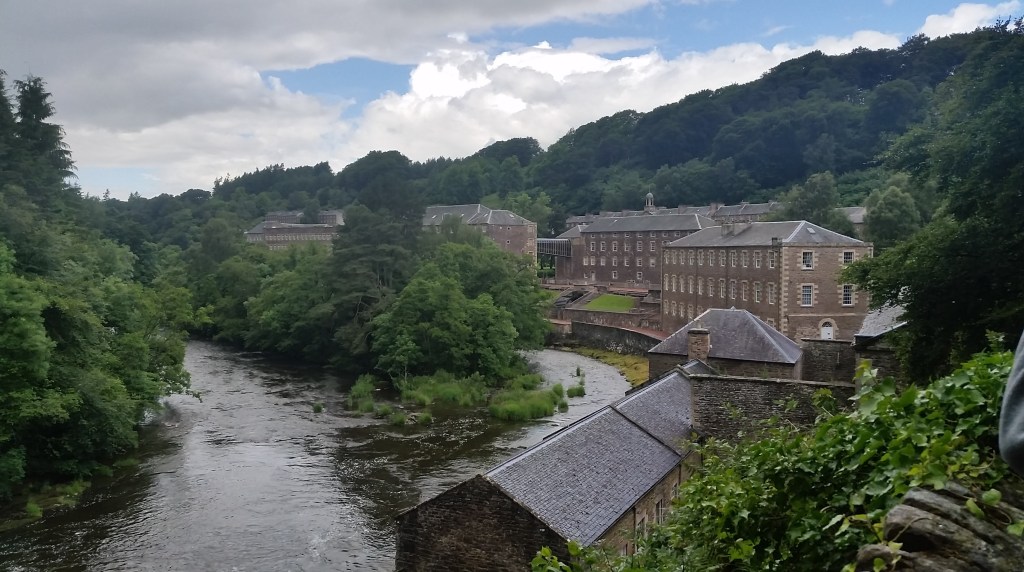
Back in 2016, I visited the New Lanark townsite in south Scotland where Owen had pioneered his ideas of improved working conditions for mill workers. It was an experiment to improve their lives. His goal was to increase livability, education, and moral fiber, the inner strength to do what you believe to be right in difficult situations. The industrial mill town provided lodging, food, and education. No child under 10 could work in the mills. Children of the workers and orphans were first sent to day care and then to school. A forerunner of a cooperative grocery store as later envisioned by the Rochdale Society of Equitable Pioneers in 1844, was established in 1813. Owen described his work at New Lanark as “the most important experiment for the happiness of the human race that has yet been instituted in any part of the world.”
Owen relocated to a rural location in southern Indiana in 1825. His reasoning is not entirely clear. That town, called New Harmony, had been built by German Utopists who had created a communal religious community centered on local agriculture and milling. The group had left Germany as Christian separatists and formed the Harmony Society in Pennsylvania. They arrived in Indiana in 1814. As believers in Utopia, they sought perfection and unity through spiritual living. They share many aspects of other Germanic religious separatists across the eastern half of the United states during the nineteenth century. They believed in simple worship houses and liturgy and desired a mystical and direct relationship with God. They formed self-sufficient villages, made and grew most of what they need to live, but did sell extra produce. Believing that the Second Coming of Christ would occur during their lifetimes they practiced soft temperance, avoided tobacco, and were celibate. The Harmonists decided to return east and sold the town to Owen.
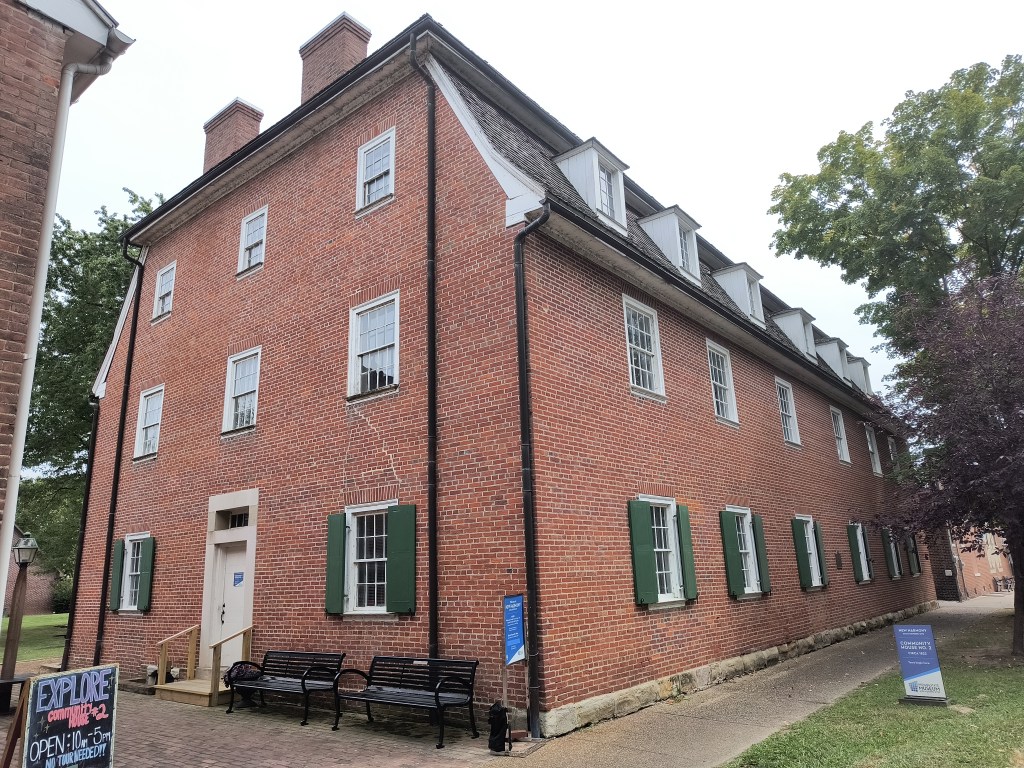
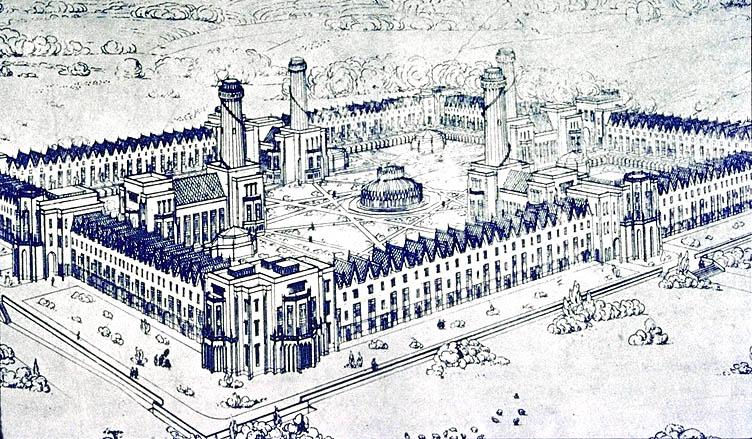
It turned out Owen had little practical knowledge about managing people who had greater expectations of personal liberty and equality. In retrospect, Owen likely should have hired one or more managers who understood American culture and its sense of individualism and perhaps even greed. He left his son in charge of the operations while he toured the eastern states to promote his version of Utopianism. His experiment in the United States ended quickly, but not before additional social ideas had been developed, including public schools and libraries. Owen’s business partner Robert McClure, a well-respected geologist from Scotland, attracted many important scholars to New Harmony, including naturalists, geologists, educators and early feminists. He went on to form a workers technical training school and library that is known as the Working Men’s Institute. Other lasting legacies of New Harmony under Owen and McClure are the town’s contributions to art and architecture, women’s suffrage movement, and the industrial development of the Midwest. Owen had envisioned a grand facility to eventually be built, but little change occurred to the existing buildings during his short tenure.
Today New Lanark, Scotland is a UNESCO World Heritage site with several financial enterprises to maintain the buildings including a hydroelectric facility, ice cream production, yarn manufacture, a visitor’s center, a hotel, and not-for-profit rental units. New Harmony, Indiana continued to develop into small rural town with a traditional main street. A number of its business are oriented to the arts. The Working Men’s Institute continues to operate. They, the University of Southern Indiana, and Indiana State Museum provide maintenance and interpretation. Most of the interpretation is focused on the Harmonist period of the town.
__________
For more information, follow the links below
New Lanark https://www.newlanark.org
New Harmony https://en.wikipedia.org/wiki/New_Harmony,_Indiana
Historic New Harmony, University of Southern Indiana https://www.usi.edu/hnh
Indiana State Museum https://www.indianamuseum.org/historic-sites/new-harmony/
Working Men’s Institute https://www.indianalandmarks.org/2018/02/workingmens-institute-new-harmony/

 On Diverse Arts and Sciences